Interdependent Living:
A Healthy and Healing Lifestyle
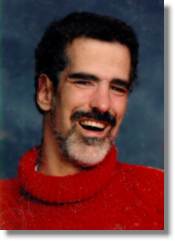
By Bill Rush
When Sue called and told me that we were having this get together, I was very excited because I wanted to see all of you and to hear what you have been doing. It is important for groups like this one to stay in touch. We have a difficult job to do and we need to nurture and support one another. It also meant a little break for Chris and me from Lincoln. However, next time how about getting together in Honolulu, Hawaii, Sue.
A lot has happened in two years. Two people with significant disabilities have gotten married, Tim Kolb and Randy May...Err, That doesn't sound right...I don't mean to each other, of course. Randy married a woman named Nicole, and Tim married a woman named Karen in two different marriage ceremonies. Next year it is Chris' and my turn... We, however, are going to get married to each other... Chris and I are very close to making the Nebraska Department of Social Services allow a person with a disability to keep Medicaid Waiver personal assistance services, even though the couple has some modest assets. We have built a power wheelchair accessible house this summer, and this coming Wednesday Chris will close on it. When I marry her, which will be either this coming May or next October, I will also own it. The house is in a regular neighborhood in Lincoln. Chris and I are very excited about that.
A lot of exciting things have been happening. People with disabilities are buying houses in the same neighborhoods as able-bodied people are living. It has come a long way from the days when we had to live in institutions that were on the hill on the out skirts of town or cloistered together in what I call a "Gimp Villa" on the first floor of a 29-storied apartment building. Now, we are moving in next door and living in houses that we own. I believe that once people live next door to us and see that we are competent people, we will be perceived as being more employable.
I'm talking about interdependent living today. In the 1970's some enlightened people got together and considered people with disabilities should move out of nursing homes and live in the community. These enlightened people decided to call it independent living because people with disabilities were living independently from nursing homes. This was logical, but it was also a mistake because the majority of people do not live independently. They just think they do.
Ed Roberts started the independent living movement. In 1962, Ed became the first student with significant disabilities to attend the University of California at Berkeley, where he received his bachelor's and master's degrees in political science. Administrators, who had opposed his admission because the campus wasn't prepared for a student in a wheelchair who used a respirator by day and an iron lung at night, housed him in Cowell Hospital.
The next year the university enrolled other students with disabilities and assigned them to the hospital as well. He led the students in lobbying for dorm housing. Eventually, he got federal money to begin a program for students with disabilities at the university-a first for the country. This was the first independent living center ever.
In 1982, I bought into the independent living movement hook, line and sinker. I believed that people should have control over their lives. I still believe this, and I probably will believe this until I meet my heavenly Maker. However, I no longer believe that people can or should live independently. I know that this is contrary to all that we have been taught, and I know that this is un-American.
I also know that most people are living in self-deception and don't know it. If you would ask the average able-bodied Jane or Joe if they are self-sufficient, they would probably say, "Sure I am!" They forget that they have to rely on not only the butcher, the baker and the candlestick maker, but the auto mechanic, the department store clerk, the mail carrier, the doctor, the police, the radio announcer and the plumber, to name just a small few.
To prove what I'm saying is true I am going to go through a morning that Chris usually has. She is an extremely independent person, but even she has to be interdependent.
Every morning she awakens to her clock radio, which was made by a company that got money indirectly from her for making her clock radio. She listens to an obnoxious country/western station so that she won't be lulled back to sleep. The DJ's get money to be obnoxious from their station which gets money from manufacturers who makes stuff that she buys.
Then, she takes a shower. She does not go outside and get water and heat it up. She goes into her bathroom and turns on the tap. This convenience is provided by the apartment building's managing agent. In return, Chris gives the managing agent a lot of money.
Then she eats breakfast. She does not get the eggs from the hen house, the milk from a cow or bread from a field of wheat. Chris goes to a store and picks out food. She then gives the store clerk money.
I think I have made my point which is none of us are independent. We all need each other to live well. If we think otherwise, we are fooling ourselves.
Still, we name living outside an institution independent living because Americans pride ourselves on being independent, even though we are deceiving ourselves.
I deceived myself, too. When I said that I wanted to live in the community, people told me that I had to learn how to be self-sufficient. They told me that I had to be able to manage my attendants, plan a menu and direct the grocery shopping, schedule rides on Lincoln, Nebraska's paratransit system and make a living at free-lance writing. Somewhere in all that I was supposed to have fun and not go insane. The funniest thing about this was that I, a college-trained journalist, believed the professionals without asking any questions. Folks, a journalist who doesn't ask any questions is like a seamstress without a needle.
I paid dearly for my blunder of not asking questions. I tried to do those things for about three years and got very frustrated and very tired. When it was evident that my lifestyle was interfering with living my life, I decided to persuade the state to let a home health agency provide my personal service assistants.
Some might say that I was surrendering some of my control and independence. I prefer to think of it as delegating responsibility. The home health agency has to depend on me to be where I say I will be when it sends personal service assistants to help me, and I have to rely on the agency to send personal service assistants who know me when it says it will. We are interdependent on one another.
When Chris entered the picture, she added another link to the chain of interdependence. The home health agency depends on her to have food and supplies available for me. Chris is dependent on them to send personal service assistants who know how to read her notes and who know how to service me safely. Chris depends on me not to let the agency to abuse her as a back up. I depend on Chris to help make things run smoothly. So far this arrangement has worked well. Interdependent living is a healthy lifestyle because as a Chinese proverb says, "Many hands make light work." To me this means that if many people pitch in on something, no one has to bare the brunt of the task. If my personal service assistants were run properly, no one should be overworked.
When I finally met Chris, the woman of my dreams, I was careful not to be dependent on her. I remember hearing about statistics that said that the split up rate of couples in which a partner had a disability was 90%. That statistic scared me until Chris pointed out that most couples are setting themselves up for failure by trying to have one partner be everything to the other. This is romantic garbage. No one can be all things to a person. That is why we have teachers, lawyers, doctors and nurses, to name just a few. However, there is an ironic twist to all of this. I was so careful to make sure that I did not need Chris. After she moved down to Lincoln, she started to ask me to run errands for her. I like it because I felt needed. I slowly realized that Chris also needed to be needed as does everyone else.
I had the gift of living on my own before I met Chris. This showed that I could manage on my own without Chris. This was very important to me. Before I could have any kind of meaningful relationship with Chris I had to know that I could choose which areas I could be dependent on her.
As a sidebar, Chris and I have noticed a strange dichotomy. When a person is single, that person is expected to do everything: cooking, cleaning, changing the oil in the car and supporting himself or herself. The ultra independent person is the single person in our society. However, when that person gets married, that person somehow loses skills and in some cases cannot survive without their interdependent relationship. If the person is a man, he forgets how to cook. If the person is a woman, she forgets how to maintain her car. It is as if the wedding ring blocks the blood flow to the brain. This example shows how arbitrarily we can apply expectations of independence and interdependence to the same people in different circumstances and is maybe something we should think about in the disability community.
This dichotomy carries over to a marriage where a spouse has a disability. When a person with a disability is single, they are responsible for getting and maintaining personal service assistance. Again, the model independent person. However, when that person gets married, the spouse suddenly becomes responsible for the personal service assistance. The person with the disability is expected to be dependent on the able-bodied person regardless of their situation prior to getting married. This sounds like an able-bodied assumption to me. Nobody asks the person with the disability how they choose to take care of their own personal needs after they get married. When Chris and I get married, I am going to have a ring that is loose so that it won't block the flow to my brain. My brain needs all the blood it can get so that I will be interdependent with Chris and not totally dependent on her as society has said I should be. We have worked hard to change social prejudices that have perpetuated this myth. The biggest obstacle was a social service system that until recently discontinued coverage of personal attendant care when someone with a disability gets married with the assumption that the able-bodied person will do all the care. I have even been told by an aide to a state senator that in America we take care of our family members. You don't need Medicaid when you get married. I asked them if they would be willing to surrender their insurance coverage. The aide got the point.
That was the end of my sidebar. Back to my main topic, which is interdependence.
I would like to tell you about how I'm interdependent with some other people, who live in the same apartment building as I do, who help me when the home health agency or Chris isn't available. I call these people my friends. One such friend is Troy. He does a variety of things like loosening a bolt or doing a load of laundry for me. He says that I give him humor and a sense of satisfaction. I wear T-shirts with jokes on them and he likes to read them.
Another friend is George. He doesn't live in my apartment building. He swims with Chris and me. He helps me get in and out of the pool at the Lincoln downtown YWCA. I, in return, share jokes with him and give him a good workout as we chase each other up and down the lap lane.
Still another friend is Mark Dahmke. We have been good friends for 20 years. He and I were college chums. He built my first voice synthesizer. He has kept my technology running and updated for twenty years. We also love Star Trek and have a shared hatred for Nebraska football. He is helping Chris and me with the technology for our new house. Chris and I trust Mark explicitly. In fact, a person from the state asked us the name of my new environmental control unit, and we had to refer him to Mark. The state person was upset because we didn't know the name of the equipment. He probably thought we were too dependent on Mark. How many of you have an auto mechanic who you would trust with your car? There are a few. If the mechanic told you that you needed to get a certain kind of oil for your car, how many of you would get that oil without asking any questions? That is the kind of trust we have in Mark. Total and absolute. My friendship with Mark is interesting for another reason. In the twenty years that we have known each other, Mark has never helped me with eating or going to the bathroom. Never. Early in our friendship he had said that he would not be comfortable doing those things. I have respected that. I also respect him for telling me that.
As I have said, these people are my friends. People in rehab call these people natural supports. Natural supports sound like jock straps or bras made out of biodegradable materials. I want to make an important point with this little joke. People with disabilities are never allowed to have normal relationships.
Chris is allowed to have friends. I remember a couple of weeks ago Chris' friend asked for help because her car needed some work in Lincoln.
The friend didn't ask Chris to provide some temporary support for a short-term crisis in her life. The friend asked, "My car is being worked on in Lincoln, would you please help me out?" Chris did not say, "I'm afraid that you are getting too dependent on me. I will this time, but we need to work on your skills at getting short term transportation needs met." Chris simply said, 'Of course, I will. How's about going for breakfast then I'd love to show you the new house?" They are friends and friends help each other out. However, people with disabilities aren't supposed to have friends. We are supposed to have natural supports. This does not make sense. On one hand, we are supposed to live independently. But on the other hand, we need natural supports. How can we be independent when we need so many supports? Doesn't that sound contradictory to you? People with disabilities are never allowed to live a simple life. They either need to be totally independent or they need to have a lot of supports. There is no middle ground, such as they live in their community with their principle supports in place, but also needing occasional help from people they call their friends.
Why can't we have friends? Chris and I looked up "friends" in the dictionary, and it said, "One, A person whom one knows, likes, and trusts. Two, a person whom one knows; an acquaintance. Three, a person with whom one is allied in a struggle or cause; a comrade. Four, one who supports, sympathizes with, or patronizes a group, cause, or movement, as in friends of the clean air movement."
Someone who supports. Uh, sounds familiar doesn't it?
Unfortunately, in the United States we value self-sufficiency too much. After all, that was how the West was won. Perhaps it is time to circle the wagons and to rely on each other. I know that this is totally against our pioneering spirits, but pioneers were lonely and died very young. I don't think we should strive for that kind of a life. People need others. Barbara Streisand's very popular song, People, says "The luckiest people in the world are people who need people."
Interdependent living has healed me from trying to live independent. An English divine and metaphysical poet, John Donne, said, "No man [or woman] is an island entire of itself." I have learned that the hard way. When I first started to live in the community, I tried to live totally independently, not being effected by much around me. That was not a good healthy lifestyle. By not allowing myself to need others, I was depriving myself of important nurturing. Now that I nave allowed myself that nurturing and to nurture others, I'm a saner person.
A couple weeks ago Chris and I were going through our videos. We came across a video of a news report of a demonstration against a movie theater for accessibility that was led by myself. I watched myself explain why we were demonstrating. As I watched, I felt sorry for the person I saw. He was so angry and so lonely. I couldn't help wondering if the person would have been so angry had he felt more a part of his community as I do now. I know he would have been a lot healthier and more whole.
I came to the realization that being interdependent was healthier in July of 1988 when I jointed the First Baptist Church in Lincoln. The Church helped me to get my relationship with God straightened out, which has helped me to get my relationships with other people straightened out. The Church has made me realize that God does not want people to live alone. He wants us to love each other.
First Baptist Church has taught me much. Its congregation is modeling how a larger community should respond to people with disabilities. A woman helps me take off my coat. A man who experiences mental limitations used to hold the elevator doors for me. I, in return, watch and listen for members who are having troubles. When I know about a person who is having difficulty, I make a cheery card for them using my computer. I also occasionally serve as worship leader. I have just recently started helping with the church's puppet ministry by doing the voices of the puppets.
In closing, I would like to challenge each of you to be a critical thinker when a person tells you that you have to be independent. Ask yourself what does that mean and do you really want to be independent. > Today we people with disabilities have to think for ourselves. Don't be like I was and agree with everything that the professionals tell you. Question them and think about their answers. Talk about their answers with someone whom you respect and trust. Then think about it some more. After all, you are the only one who gets to live your life. You should be happy doing it. If you aren't happy, you should change it because you only get one life.

About the Author:
I have been living with cerebral palsy all my life and have had to coordinate community resources for a good part of that time, I have ample experience. For the past 15 years I have been serving as a peer counselor for the local Independent Living Center, which is called the League of Human Dignity, Inc. I have provided information, referral and other services to people who experience disabilities and their families. I also have assisted its Public Information Specialists in preparing brochures for public consumption. One, "Write with Dignity," has been widely requested by the media.
Before I was on the board of directors of Nebraska Advocacy Services, an agency that provides legal services to people with disabilities, I was in charge of producing that agency's newsletter. Since I have been on the board of directors of the Nebraska Advocacy services, my duties have included being on the monitoring committee for the implementation of service coordination throughout Nebraska and being on the Nebraska Governor's Council on Developmental Disabilities.
I have been involved with disability issues on both a personal and professional level.
I have enjoyed using my journalistic expertise to empower people with disabilities and their families as well as improving the service delivery system.
Bill has written a great book titled Journey Out of Silence. For more about the book, the author and the services he provides, you can get there from here.